
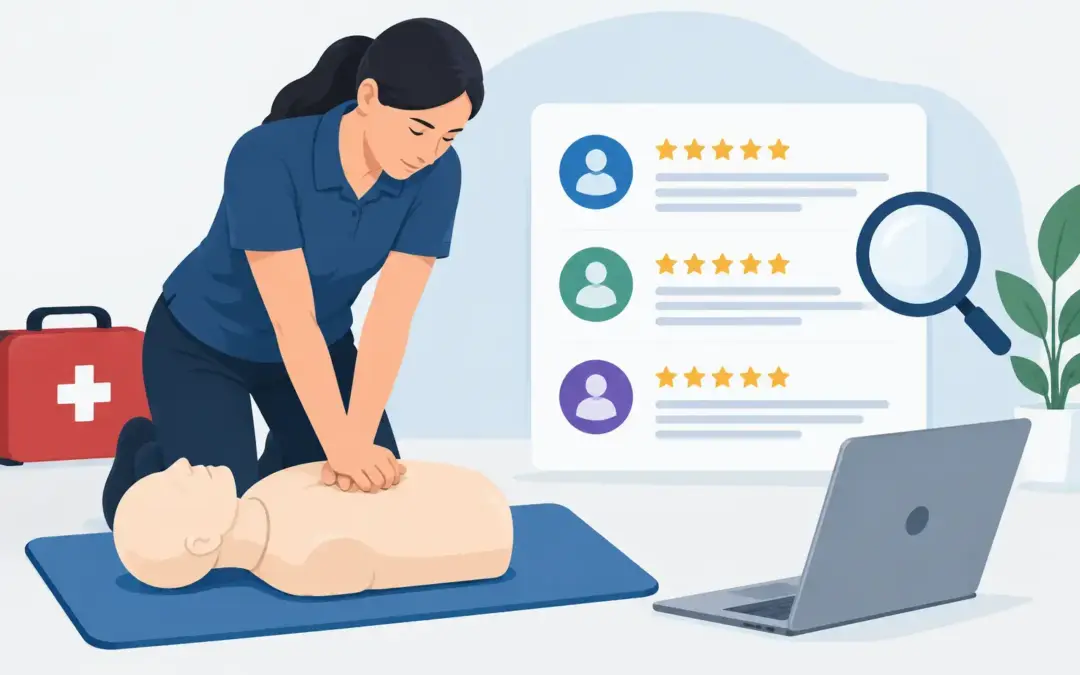
A CPR class can look similar on a schedule but feel entirely different when a student is kneeling beside a manikin, managing an airway, and trying to remember the next step under pressure. That is why CPR training provider reviews deserve more attention than star ratings alone. For future EMTs, healthcare workers, public-safety applicants, and community members in Staten Island and New York City, the right provider should build usable skills, not simply issue a completion card.
How to Read CPR Training Provider Reviews
Start by looking beyond the overall score. A high rating is encouraging, but the written comments tell you what the experience was actually like. Look for specific details about instruction, practice time, class organization, and whether students left feeling prepared to respond. Reviews that say only “great class” are positive, but they reveal less than a comment explaining how an instructor corrected hand placement, answered practical questions, or created a calm learning environment.
The strongest feedback often describes a clear connection between teaching and real-world response. Students may mention practicing compressions until they reached the required depth and rate, learning how to use an AED, or becoming more confident about responding to choking. Those details indicate that the course emphasized performance, not passive attendance.
Also consider who is writing the review. A parent taking CPR for a child-care requirement may evaluate the class differently from an EMT candidate, a hospital employee, or a firefighter applicant. Their perspectives are all useful, but your needs should guide your decision. If you need a credential for employment, focus on reviews from people with similar workplace or certification requirements.
Look for evidence of hands-on practice
CPR is a physical skill. Students should expect to perform compressions, practice rescue-breathing techniques when applicable to the course, use an AED training device, and work through realistic response scenarios. A review that highlights substantial individual practice is more meaningful than one that simply praises a convenient location.
Ask whether the class provides enough equipment for students to practice without spending most of the session waiting. In a well-run course, instructors can observe each participant closely, correct technique, and make time for repeat attempts. Skill feedback matters because even small adjustments to compression depth, recoil, hand position, or pacing can affect performance.
Be cautious about reviews that repeatedly describe a course as extremely fast with little mention of practice. A short class is not automatically a poor class. Some recertification courses are appropriately efficient for experienced providers. Still, a first-time student generally benefits from a format that allows time to ask questions, make mistakes, and practice until the sequence becomes familiar.
Pay attention to instructor credibility
A CPR instructor does not need to be dramatic to be effective. The best instructors are prepared, clear, observant, and able to explain why a skill matters. Reviews may refer to an instructor’s EMS, nursing, hospital, fire, rescue, or public-safety background. That field experience can add valuable context when it is paired with strong teaching ability.
Look for comments about how instructors handled questions, adapted explanations for beginners, and maintained a professional class environment. A student who has never seen an AED may need straightforward instruction without jargon. An experienced EMT refreshing skills may need protocol-aware discussion and precise performance coaching. A provider should be able to meet both learners where they are.
At TIMER, instruction is led by experienced emergency-response, healthcare, and EMS professionals, which supports the practical, career-oriented approach many local students want. For any provider, credentials should be current and instructors should be authorized to teach the course being offered. It is reasonable to ask about instructor background before enrolling.
CPR Training Provider Reviews and Certification Fit
One of the most common mistakes is assuming that every CPR card meets every requirement. CPR courses can differ by intended audience, curriculum, assessment method, and issuing organization. Before relying on reviews, confirm exactly what your employer, school, clinical site, volunteer agency, or licensing pathway requires.
For example, a healthcare position may require a particular level of training and a course that includes adult, child, and infant CPR, AED use, and additional skills. A workplace or community requirement may accept a different course. If your goal is EMT training or a healthcare career, ask the program or employer what documentation it accepts before you register.
Useful reviews may mention that cards were issued promptly, course requirements were explained clearly, and students received help understanding renewal timelines. These are good operational signs. They do not replace verification. The provider should be able to tell you the course name, issuing body, expected completion requirements, and when you can expect your credential.
For career-focused students, it is also helpful when a provider distinguishes CPR training from EMT certification. CPR is a foundational emergency-care skill, but it is not a substitute for the structured education, clinical decision-making, and New York State certification requirements involved in becoming an EMT. Honest guidance about that difference reflects a provider that takes professional standards seriously.
Separate Convenience From Training Quality
Convenience matters. A course close to home, accessible by local transportation, or scheduled around work can make the difference between enrolling and postponing training. Reviews that mention punctual starts, organized registration, clean classrooms, and responsive staff are worth considering. These details show respect for students’ time.
But convenience should not be the only factor. A provider with a polished registration process may still offer limited hands-on coaching. On the other hand, a classroom-based provider may require more of your time while giving you direct feedback that an online-only format cannot provide. The right choice depends on your requirement, prior experience, and comfort level with practical skills.
Read negative reviews with the same care you use for positive ones. One complaint about parking, a schedule change, or an individual misunderstanding does not define an entire program. Patterns are more informative. If several students mention disorganization, unclear certification information, rushed practice, or difficulty reaching staff, take those concerns seriously. If the provider responds professionally and works to resolve legitimate issues, that also provides useful context.
Questions to Ask Before You Enroll
Reviews can narrow your choices, but a direct conversation can confirm whether a class fits your needs. Ask what certification is issued, whether the course meets your specific employment or school requirement, and how much time is devoted to individual skills practice. You should also ask whether there is a hands-on assessment, what happens if a student needs additional coaching, and when credentials are issued after successful completion.
If you are preparing for an EMS or healthcare path, ask how the class supports future training. A provider should not promise that one CPR course guarantees success in an EMT program or emergency-care career. It can, however, give you a useful introduction to patient assessment, team communication, urgency, and the discipline of following a sequence under stress.
Class size is another fair question. Smaller groups can allow more personalized feedback, while larger programs may offer more scheduling options and a deeper instructor bench. Neither model is automatically better. What matters is whether each participant receives sufficient observation and correction to demonstrate the required skills confidently.
Choose Training That Prepares You to Act
The most valuable review is often the one that describes a change in confidence: a student arrived uncertain, practiced under qualified guidance, and left knowing how to recognize an emergency, call for help, begin care, and use available equipment appropriately. That confidence should be grounded in demonstrated skill, not false reassurance.
When comparing providers, choose the course that meets your requirement and gives you meaningful practice with capable instruction. A CPR card may open a door at work, in school, or on the path toward EMS, but the training behind it is what can help you respond when someone needs help most.

